Artist portfolio · design & build
Larry Burns
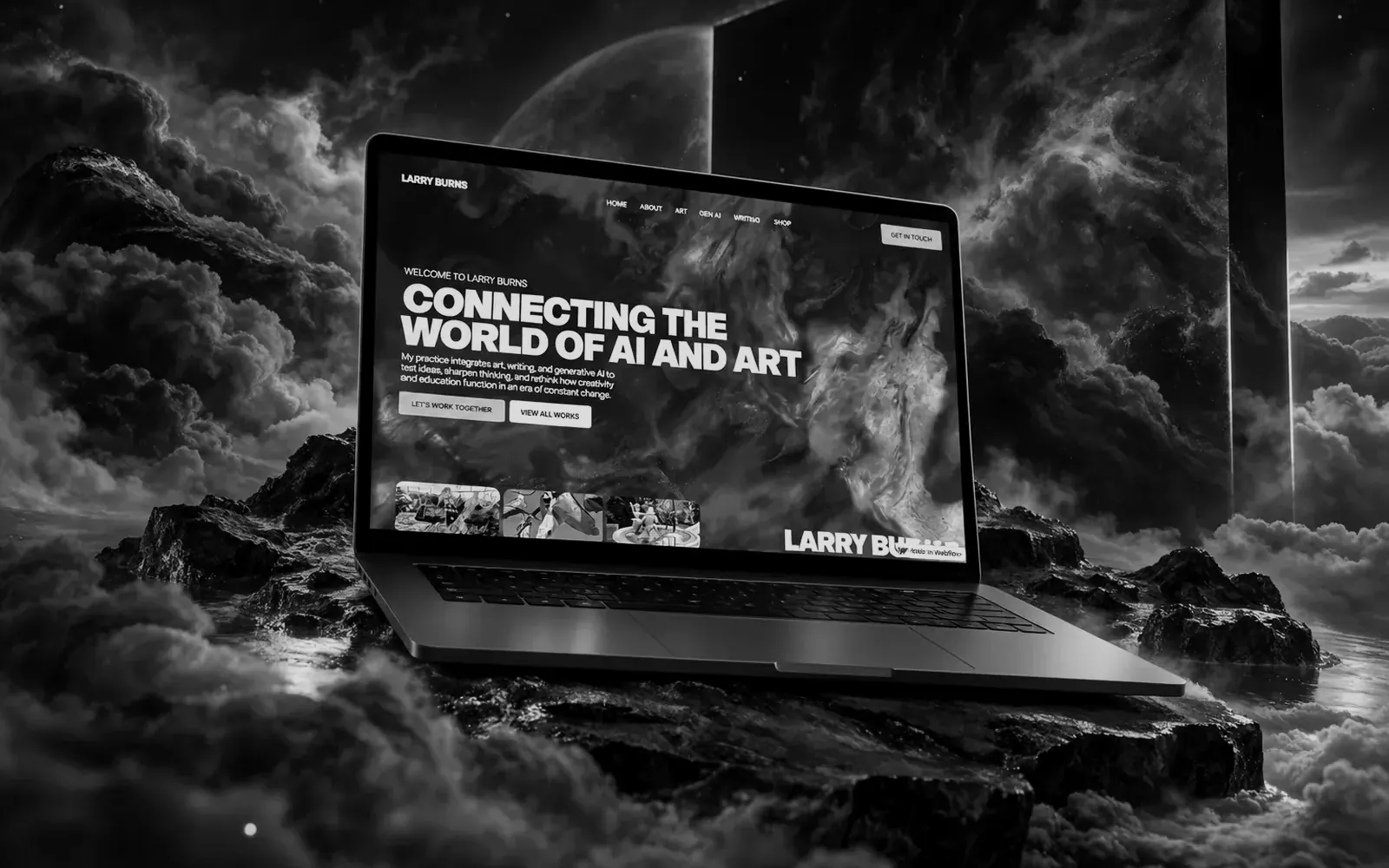
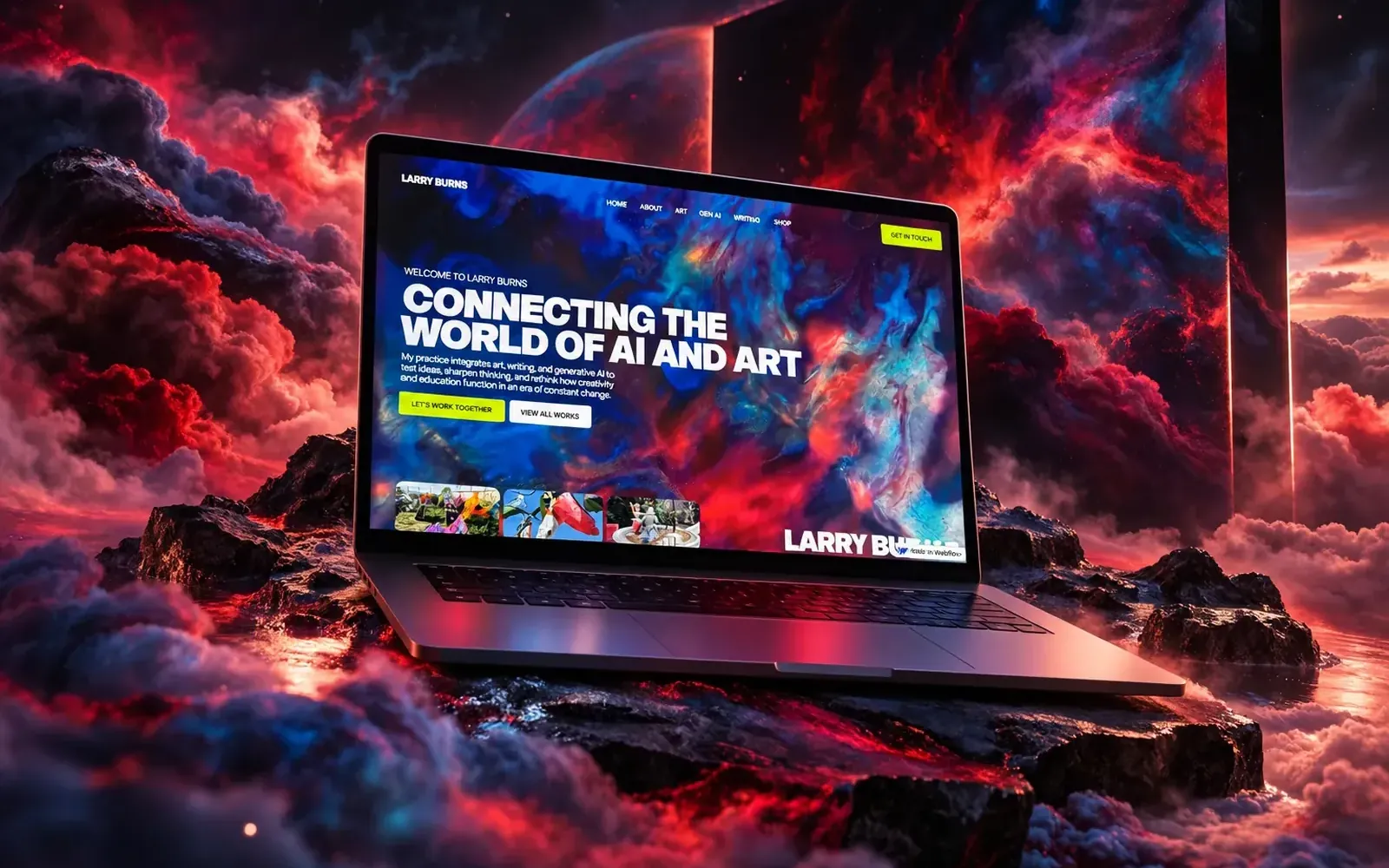
A portfolio for an artist working across art, writing and generative AI — work, essays and a shop in one place.
- Role
- Development, Webflow build, CMS
Artist portfolio · design & build
A portfolio for an artist working across art, writing and generative AI — work, essays and a shop in one place.
01 / 14 01 — The challenge
Three bodies of work — physical art, writing and generative AI — that read as three different people when presented separately. Split across platforms, each one made the others look like a side project, and an audience arriving for one never discovered the rest.
02 / 14 02 — The objective
Present one practice with three expressions: a single place where the work can be seen at full size, the writing can be read, pieces can be bought, and new work goes up without help.
03 / 14 03 — The approach
04 / 14 04 — The solution · 01
The opening frames the work as a single body with several expressions, so a visitor understands the artist before choosing a route.
05 / 14 04 — The solution · 02
Pieces are shown large, with the interface receding — the page behaves like a gallery wall rather than a grid of thumbnails.
06 / 14 04 — The solution · 03
New art, essays and shop items are added from the CMS, so the site keeps pace with a practice that publishes continuously.
07 / 14 05 — Key decision 01
It's what turns three disconnected bodies of work into one recognisable practice — the difference between a hobbyist and an artist with a body of work.
08 / 14 05 — Key decision 02
Anything competing with the artwork was removed. In a portfolio, the design's job is to disappear at the right moment.
09 / 14 05 — Key decision 03
An artist who has to ask someone to publish will publish less. Ownership of the site keeps the archive growing.
10 / 14 05 — Key decision 04
Selling in a separate template would have broken the practice into 'art' and 'store' again.
11 / 14 06 — The outcome
The artist has one place that presents art, writing and generative work as a single practice, shows each piece at full size, sells from inside the same experience, and is updated by the artist himself.
12 / 14 08 — Capabilities
Built with Webflow · Webflow CMS
In one line
Three scattered bodies of work now read as one practice — and the archive grows whenever the artist decides, not whenever a developer is free.
End of the story
Want one like it? Tell us what it has to do.
(Next step)
Kendrick Samonte — Founder, BLNKD Studio